Commercial water damage restoration in Lancaster, CA runs on a reality residential jobs do not face - every hour your space is down, your business is bleeding revenue, customers, and operational continuity. A flooded restaurant on Lancaster Boulevard needs to reopen before the health department gets involved. A medical office with wet ceiling tiles has compliance deadlines. A warehouse with soaked inventory needs claims documentation yesterday. We restore commercial properties across Lancaster with the speed business demands and the documentation commercial insurance requires. Your business cannot wait for a residential-paced timeline.

Commercial kitchens concentrate plumbing, drainage, and appliance connections in high-use areas that fail under load. Grease trap overflows, commercial dishwasher failures, restroom backups, and under-counter supply line breaks are common sources. Water damage in a food-service environment carries unique urgency because health department closure can result from unresolved moisture or contamination. Our restoration in food-service properties accounts for health code compliance checkpoints throughout the process - from contamination assessment through final surface treatment - so that reopening documentation is ready when the space is dry.
Walk-in cooler and freezer water damage requires targeted attention. A refrigeration line failure or condensate backup inside a walk-in introduces moisture into an enclosed, insulated space that resists standard drying approaches. We deploy specialty drying equipment to address these enclosed environments.
Medical facility water damage adds compliance requirements that commercial offices do not face. Infection control protocols must be maintained during and after restoration. If patient records - physical or stored on equipment exposed to moisture - are involved, HIPAA-compliant handling governs how those materials are managed during the restoration process.
Medical equipment exposed to water is isolated and protected from further exposure immediately. Sterilization areas require documented decontamination before clinical use resumes. We coordinate with practice management to schedule restoration activity around patient care when partial closure allows continued operations.
Office water damage typically originates from HVAC condensate line failures, restroom plumbing within walls, or building supply line breaks. Standard commercial environments have suspended ceiling tile, commercial carpet, and interior partition walls - all materials that absorb water quickly. Suspended ceiling tile that has absorbed water is structurally compromised and is replaced rather than dried.
Server rooms and IT closets require immediate content manipulation - safely relocating equipment from the affected area and protecting it from ongoing moisture exposure. We clear the environment first, then dry the space. When electronic equipment has been directly exposed, assessment by an electronics restoration specialist determines what can be recovered.
Retail water damage affects storefront operations, inventory, and customer access. When containment allows, unaffected portions of the space can remain open while restoration proceeds in the damaged section. Inventory in the affected area is documented for claims - item-by-item when necessary - before it is moved or manipulated. Shared-wall water migration from an adjacent tenant's event is common in Lancaster's strip-center retail and requires coordination with property management and multiple tenants.
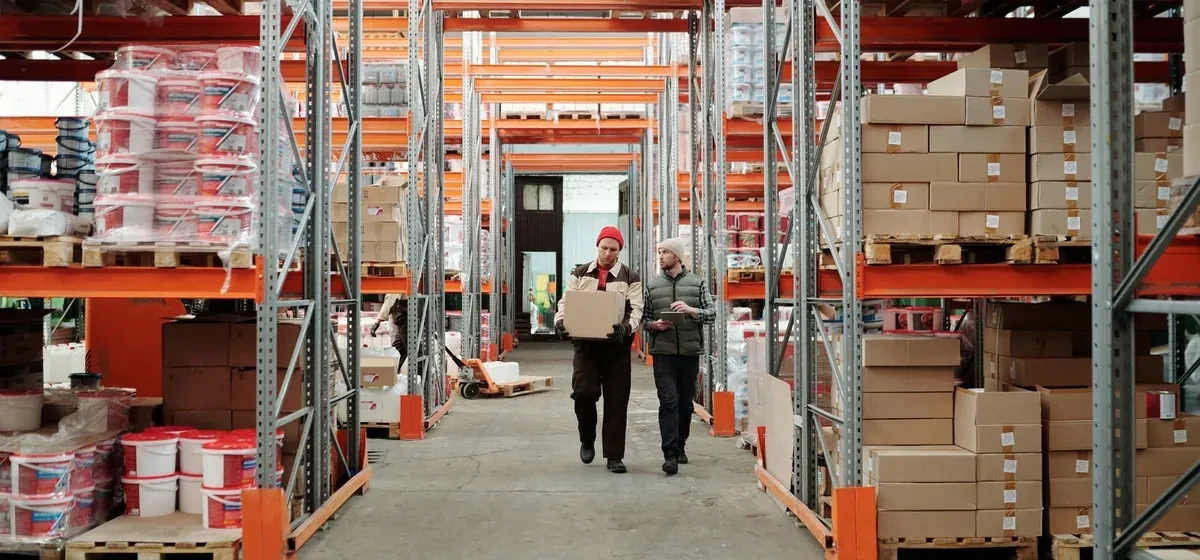
Large-footprint warehouse spaces present different drying challenges than partitioned office or retail environments. Concrete floors across thousands of square feet, high ceilings, and large air volumes require commercial-capacity desiccant dehumidifiers and high-volume air movers that are not used in residential work. Dock doors and overhead doors are common water entry points during storm events - the openings are large and seals provide limited flood resistance. Inventory damage documentation distinguishes between floor-level stock, pallet-level storage, and racked goods - each with different exposure levels and claim values.
Commercial property insurance differs from residential policies in structure, coverage distinctions, and claims processing complexity.
Building vs. tenant improvements vs. contents. Commercial claims require documentation that clearly separates building components (typically the landlord's policy), tenant improvements and build-out (typically the tenant's policy), and business contents and inventory (tenant's contents coverage). We structure our documentation to support these separations so that each claim is filed against the appropriate policy with the right supporting detail.
Business interruption coverage. If your commercial policy includes business interruption insurance, lost revenue during the restoration period may be covered. The documentation of timeline, scope, and restoration duration supports these claims.
Lease-dependent responsibility. Who is responsible for what - the landlord or the tenant - depends on the lease agreement, the water source, and each party's coverage. Building structure and common-area plumbing are generally the owner's responsibility. Tenant improvements and contents are the tenant's. Both parties benefit from professional documentation that makes each claim clear.

If the affected area can be contained and isolated from operational areas, many businesses continue with modifications. For situations where the entire space is affected or health and safety concerns prevent occupancy, temporary closure or relocation may be necessary. Business interruption insurance may cover lost revenue during restoration.
It depends on the lease, the water source, and each party's insurance. Generally, the building owner covers building structure and common-area plumbing. The tenant covers tenant improvements and contents. Professional documentation that separates these scopes helps both parties file against the correct policy.
Electronic equipment is moved out of the affected area immediately - safely repositioned to a dry location and protected from further moisture exposure. The surrounding space is dried and decontaminated before equipment returns. Equipment that was directly exposed to water should be evaluated by an electronics restoration specialist before being powered on.
Yes. For commercial properties where daytime restoration would disrupt operations, we schedule work during off-hours - evenings, overnights, and weekends - to minimize impact on your business while maintaining the restoration timeline.
Water in shared-infrastructure buildings rarely stays in one suite. We coordinate across tenants, property management, and multiple insurance policies - establishing containment boundaries, documenting damage to each space independently, and managing the restoration so that unaffected tenants can continue operating where possible.

Water extraction in Lancaster, CA is the single step that determines how much of your property can be saved and how much needs demolition.
Learn more
Dehumidification in Lancaster with LGR and desiccant units sized by load, monitored daily by grain depression readings.
Learn more
Around the clock water damage cleanup in Lancaster for night, weekend and holiday losses of every size.
Learn more
Water damage restoration in the Lancaster Boulevard area serves the historic downtown core of Lancaster - the commercial corridor and surrounding neighborhoods that define the city's identity.
Learn moreThe phone assessment costs nothing and starts the clock in your favor: source guidance now, extraction and drying as fast as the job allows.