Water damage restoration in the 93535 area covers East Lancaster - established 1980s-1990s neighborhoods and newer construction stretching toward the eastern Antelope Valley. The primary water damage risk here is not old plumbing - it is aging appliances. Water heaters, dishwashers, and washing machines installed when these homes were built are now 20 to 30 years past their prime. Open floor plans let water spread across entire ground floors before hitting a wall. And properties near eastern drainage channels face flash flood exposure during storm season. We restore 93535 properties with the right approach for this area's specific challenges.

Open floor plans with longer migration distances. Many East Lancaster homes feature open layouts where kitchen, dining, and living areas flow together without walls between them. These layouts let water from a kitchen supply line failure or dishwasher leak spread across the entire common area before encountering a wall or threshold. A leak that would affect one room in a compartmentalized older home can affect the entire ground floor of an open-plan house in the same timeframe.
Aging appliances reaching end-of-life. Homes built in the 1990s and 2000s are reaching the age where original appliances are at or past expected service life. Dishwashers, washing machines, and refrigerators installed at construction are 20 to 30 years old. Their supply connections, internal hoses, and drain fittings have been under pressure for their entire lifespan. Water heaters in these homes are well past the 8-10 year service life expected in Lancaster's hard water conditions.
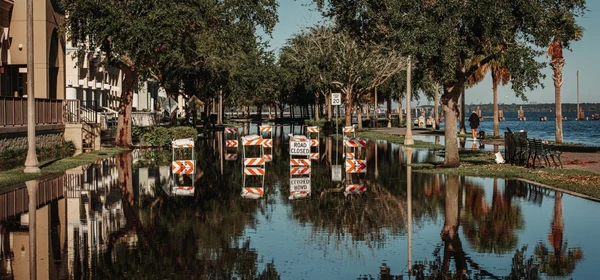
Drainage channel proximity. Eastern 93535 includes properties near natural drainage channels that carry runoff during storm events. Desert thunderstorms and El Niño-driven storms produce runoff that can overspill these channels onto adjacent properties. Standard homeowners insurance does not cover flood damage from exterior water - a separate flood policy is needed.
Garage-positioned utilities. East Lancaster's single-story homes commonly house the water heater, laundry, and sometimes a water softener in the garage. A water heater failure or supply hose burst in the garage sends water across the garage floor and, if volume is sufficient, over the threshold into the house. The garage-to-house transition is one of the most common water entry paths in 93535 events.

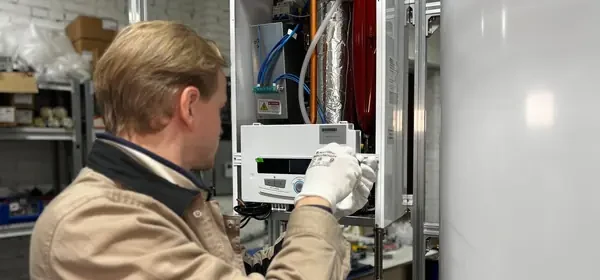
Water heater end-of-life failure. Tank water heaters in 1990s-built homes are now 25-30 years old - far beyond expected service life, especially in Lancaster's mineral-heavy water. Sediment accumulation, tank liner corrosion, and anode rod depletion all contribute to eventual failure that releases the full tank contents onto the garage floor with the supply line continuing to feed.
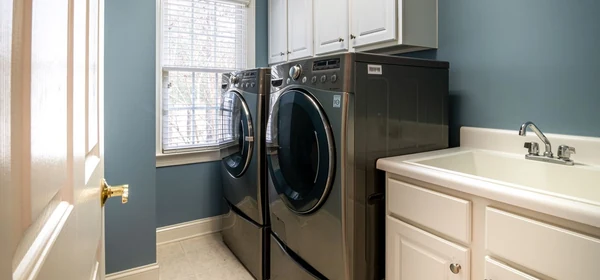
Washing machine supply hose bursts. Rubber supply hoses deteriorate from the inside, weakening at crimp fittings. A burst while the machine is running releases water under full municipal pressure directly onto the laundry area floor. In garage-laundry homes, this follows the same path as a water heater failure - across the garage, through the doorway, into the living space.
Refrigerator ice maker line failure. The small-diameter supply line to the ice maker - typically quarter-inch copper or braided steel with compression fittings - can loosen over time or fail at the fitting when the refrigerator is moved. The leak goes undetected behind the appliance, spreading under and behind the refrigerator before becoming visible.
Roof leak during wind-driven rain. East Lancaster homes with tile roofs are well-protected from normal rainfall, but wind-driven rain during storms can enter through damaged flashing, cracked tiles, or failed valley transitions. Regular high-wind events in the Antelope Valley - frequently exceeding 40-60 mph - can lift or shift tiles, creating entry points not visible from the ground.

Each service below is delivered in this neighborhood at the full Lancaster standard, with moisture-verified drying and insurance-ready documentation.

Water heater leak cleanup in Lancaster, CA responds to one of the most common and most preventable water damage events in the Antelope Valley.
Learn more
Washing machine flood cleanup in Lancaster, CA responds to one of the most common causes of catastrophic residential water damage - a supply hose or connection failure releasing pressurized water directly onto the laundry area floor.
Learn more
Storm and flash flood water damage in Lancaster, CA occurs when the Antelope Valley's extreme weather overwhelms landscape and infrastructure, pushing water into properties never designed for exterior intrusion.
Learn more
Water extraction in Lancaster, CA is the single step that determines how much of your property can be saved and how much needs demolition.
Learn moreThe map below shows Lancaster 93535 - the part of the Lancaster service area this page is written for.
Water Damage Restoration Lancaster CA
Serving Lancaster, CA 93535 and the wider Lancaster, CA service area - zip codes 93534, 93535, 93536, 93539 and 93584, including Quartz Hill, West Lancaster, East Lancaster, Antelope Acres and the Lancaster Boulevard area.
Open 24 hours, 7 days a week.
Yes. An unexplained water bill increase is one of the first indicators of a concealed leak - often a slab leak or a supply line leak within a wall cavity. The water is present but has not yet produced visible symptoms. A professional moisture inspection determines whether a concealed leak is present and its extent before it progresses further. → Moisture mapping
Properties near natural drainage channels in eastern Lancaster have elevated flash flood exposure during storm events. Standard homeowners insurance does not cover flood damage from exterior water. Consider a flood insurance policy, ensure landscape grading directs water away from the structure, keep garage door seals in good condition, and have sandbags available during storm season.
In Lancaster's hard water environment, tank water heaters have a working life of roughly 8-10 years. Warning signs include rusty water from the hot tap, rumbling or popping sounds from sediment buildup, visible corrosion on the tank or fittings, and any age approaching or exceeding 10 years. Proactive replacement is less expensive and less disruptive than emergency restoration.
Yes - and it frequently does. A water heater releases 40-80 gallons from the tank alone, with the supply line continuing to feed. In garage installations, water flows across the garage floor toward the lowest point, which is often the step-up at the garage-to-house door. If volume is sufficient, water overtops the threshold and enters the living space.
Call for the phone assessment and we will route the response to your neighborhood, with shutoff guidance while help is on the way.