Moisture mapping and detection in Lancaster, CA finds the water damage you cannot see. Visible water on the floor is obvious - the real damage extends into wall cavities, under flooring, behind cabinetry, and along migration paths that carry moisture into rooms showing zero visual evidence. Professional detection uses penetrating meters, non-penetrating scanners, infrared thermal imaging, and systematic monitoring to map every wet area in the structure. This map determines the full drying scope, guides equipment placement, and provides documentation proving drying goals were achieved. Without it, concealed moisture becomes mold. → Mold inspection services

Penetrating (pin) moisture meters. Two pins pressed into the material measure electrical resistance between them. Water conducts electricity - dry material resists it. The resistance reading converts to a moisture content percentage. Pin meters give precise, material-specific readings at the exact point of contact. Used on drywall, wood framing, baseboards, and materials where a small pin hole does not create cosmetic concern.
Non-penetrating (scanning) meters. These send an electromagnetic signal into the material and measure its return - no physical contact needed. Ideal for scanning finished surfaces like tile, LVP, painted drywall, and cabinetry without leaving marks. Scanning meters indicate relative moisture presence - showing where wet transitions to dry - but do not provide the same quantitative readings as pin meters.
Infrared thermal imaging. Thermal cameras detect temperature differences across surfaces. Wet materials are cooler than dry ones because evaporation consumes heat energy. A thermal image of a wall or floor shows cooler zones - color variations on the screen - corresponding to moisture presence. Particularly valuable because it allows rapid scanning of large areas to identify moisture patterns that would take hours to find with point-by-point meter readings. It also reveals moisture behind intact finished surfaces - water in a wall cavity behind painted drywall appears as a cooler zone on the thermal image.
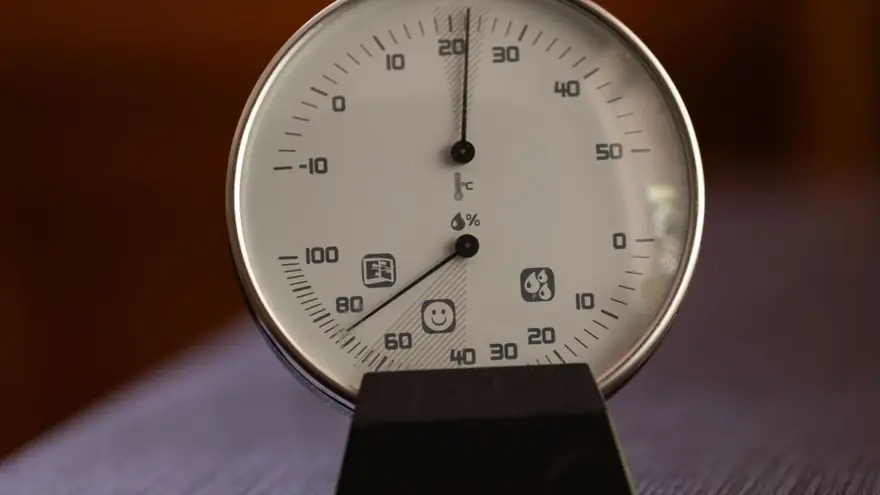
Thermo-hygrometers. These measure temperature and relative humidity of the air in the drying environment. Combined with psychrometric calculations, they evaluate whether drying equipment is achieving adequate grain depression and whether the drying environment is progressing toward conditions that will reach the drying goal. → Structural drying science

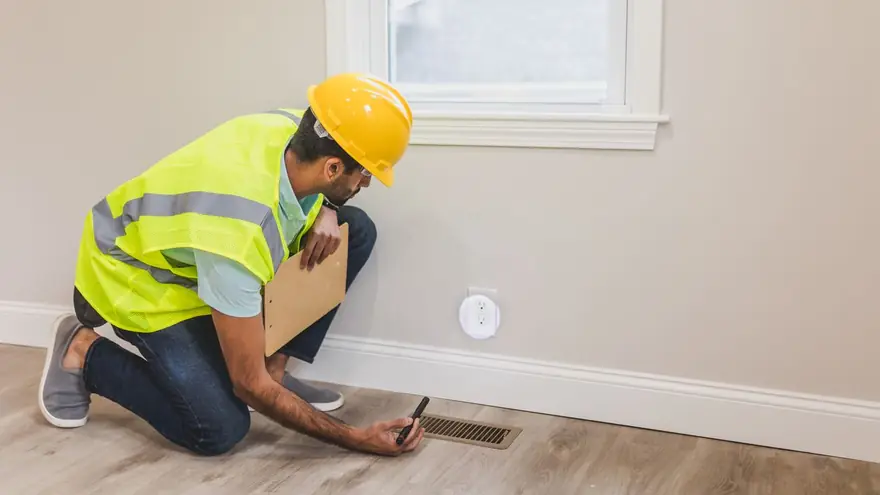
Initial mapping after extraction. The team maps the full extent of moisture migration by taking readings at the point of origin, along the baseboard line in every direction from the source, behind and beneath cabinetry, at flooring transitions between rooms, at wall-to-wall junctions, inside wall cavities accessed through outlets or small inspection openings, and at the concrete slab surface. The result is a documented map showing the boundary between wet and dry for every material type. This map defines where equipment is placed, how many air movers and dehumidifiers are needed, and what areas require monitoring. → Extraction removes the water first
Daily monitoring during drying. Readings at every monitoring point are taken each day and compared to previous readings to confirm moisture is trending downward. If a point is not progressing - static or increasing - the drying setup is adjusted: equipment repositioned, additional units added, or material opened for direct access.
Final verification. Drying is complete when every monitoring point has reached its drying goal - within acceptable range of the dry reference standard for each material. Final readings are documented and become part of the project record, providing objective evidence the structure is ready for repair and rebuild.

Water hides in predictable places - if you know where to look:
Baseboard-to-slab junctions into adjacent rooms. Water follows the gap between the baseboard and the concrete slab like a channel, reaching rooms that appear completely unaffected.
Behind kitchen and bathroom cabinetry. Cabinet toe kicks conceal the floor surface beneath. Standing water behind cabinets can persist for weeks without visual evidence from the room side.
Under flooring transitions between rooms. Where one flooring material meets another - carpet to tile, LVP to hallway - water migrates through the transition into the adjacent space.
Inside wall cavities. Water enters through gaps at the bottom plate and rises through wicking. Insulation, if present, holds moisture. If absent, dust and organic debris on framing surfaces provide food for mold in the presence of sustained moisture.
Floor systems in two-story homes. An upstairs bathroom leak deposits water into the subfloor, along joists, through plumbing penetrations, and into the first-floor ceiling cavity. Each area requires independent monitoring. → 93536 two-story restoration
Concrete slab beneath LVP or laminate. The flooring surface looks dry. The slab beneath is still wet. Without moisture readings at the slab interface, this concealed moisture goes unaddressed - leading to mold growth at the flooring bond line and premature flooring failure.
Consumer meters provide general indications but lack the accuracy and material-specific calibration of professional instruments. A consumer meter may indicate "wet" or "dry" in general terms but cannot provide the specific moisture content readings needed to determine whether a material has reached its drying goal. Professional pin meters, scanning meters, and infrared cameras used in combination provide the diagnostic precision restoration decisions require.
Surface drying and subsurface drying happen at different rates. Painted drywall can feel dry while the paper backing and gypsum core remain elevated. Carpet face dries quickly while pad retains moisture. LVP looks perfect while the slab beneath is wet. Moisture readings - not visual inspection - determine when drying is actually complete.
Mold colonization on porous materials can begin within 48 to 72 hours when humidity stays above approximately 60% relative humidity. Materials that remain wet past this window enter conditions where biological growth is likely - and once growth starts, remediation becomes a separate project on top of the original restoration. This is why moisture mapping during drying is not optional. → Mold inspection | → Mold removal
Moisture mapping is an integrated part of every water damage restoration project. It begins during the initial assessment, continues with daily monitoring throughout drying, and concludes with final verification readings. It is not an add-on - it is how we confirm the drying process is working and when it is complete.

Structural drying in Lancaster, CA is applied science - not opening windows and hoping desert air does the work.
Learn more
Water extraction in Lancaster, CA is the single step that determines how much of your property can be saved and how much needs demolition.
Learn more
Slab leak water damage in Lancaster, CA is one of the most insidious forms of water damage a homeowner can face - a plumbing failure hidden beneath the concrete foundation, quietly saturating building materials from below while producing symptoms so subtle that weeks or months pass before the problem is recognized.
Learn more
Water damage restoration in the 93534 area of Lancaster serves central Lancaster - the oldest and most densely built part of the city.
Learn moreThe phone assessment costs nothing and starts the clock in your favor: source guidance now, extraction and drying as fast as the job allows.